
Midlothian Previous Residents Source Eras
Previous residents leave different records. A deed identifies transfer parties, not everyone at the address. An appraisal result shows the current roll, not a full ownership history. A directory or telephone book can place a subscriber or household clue at an address, while a census records a household on its enumeration date. Use the nearest source and retain each limitation.
| Source | Years It Covers | Where Held | What It Shows |
|---|---|---|---|
| AcclaimWeb deed index | Finalized through 08/28/2026; earliest live date not posted | Ellis County Clerk portal | Transfer parties, instrument, and legal description; not occupancy |
| Older deed books and indexes | Pre-online years; exact county cutoff not located | County Clerk and microfilm depositories | Earlier chain of title; ask the custodian to confirm access |
| ECAD appraisal | Current roll; historic start not located | ECAD property search | Current owner, mailing and situs details; not a full historic series |
| UNT Greater Dallas White Pages | 1983, 1984/85, 1985/86 examples | UNT Portal to Texas History | Telephone subscriber and address wording; regional and incomplete |
| Northern Texas telephone exchange | 1885 example | Library of Congress | Early exchange evidence; complete local listing unconfirmed |
| Waxahachie directories | 1895–96, 1907, 1922, 1927–28, 1942 | Sims Library/local materials | County-seat context, not Midlothian-specific |
| Federal census | Public through 1950 | NARA and authorized digital repositories | Historical household on an enumeration date; boundaries differ |
| Midlothian permits | Current MyGov/report system; archive range not posted | Development Services and City Archive | Construction or alteration timing and applicant fields |
| Sanborn maps | 1898–1944 broad coverage | Library of Congress, city history, and archives | Building footprint, materials, and street context; not a resident roll |
| Obituaries and probate | FamilySearch Texas probate 1800–1990; local runs unconfirmed | Museum, Sims, FamilySearch, and County Clerk | Death and heir endpoints; coverage and indexing vary |
For a recent transfer, begin with the current parcel and deed. For an older question, pair a dated directory with the nearest census. No source alone proves continuous occupancy. Build a dated stack that records each name and record role.
Freeze a Midlothian Parcel Identity
Before tracing past residents, save the current result from the Ellis Central Appraisal District property search. Record the property or geographic ID, situs, meaning the property-location address, mailing address, legal description, current owner, exemption flags, and neighborhood or map code, plus the retrieval date. Appraisal data changes. A saved starting point prevents a later search from mixing a current screen with an older deed.
The legal description is the bridge when street numbers change. An old record may use lot, block, subdivision, survey, or a metes-and-bounds description, which identifies land by measured courses and distances. A mailing address is a contact clue, not proof of presence at the parcel. Keep each owner role separate from a directory subscriber or census member.
- Property or parcel ID and geographic ID
- Situs and mailing addresses, recorded separately
- Legal description and subdivision or lot-block wording
- Current assessment owner and ownership percentage
- Map or neighborhood code and retrieval date
Note: Keep the retrieval date with parcel details because an appraisal display can change after a transfer or correction.
Follow Midlothian Previous Residents by Deed
The Ellis County AcclaimWeb official-record search is the recorded-document starting point. Search the current owner as a grantee with a broad date range, select DEED and, if useful, DEED OF TRUST or RELEASE, then compare the instrument number and legal description before accepting a match. The seller named in the purchase deed is the next person or entity to search as a grantee in an earlier period. This produces a backward ownership trail, not a complete statement about past residents.
The source image below shows the county’s AcclaimWeb recorded-document search.
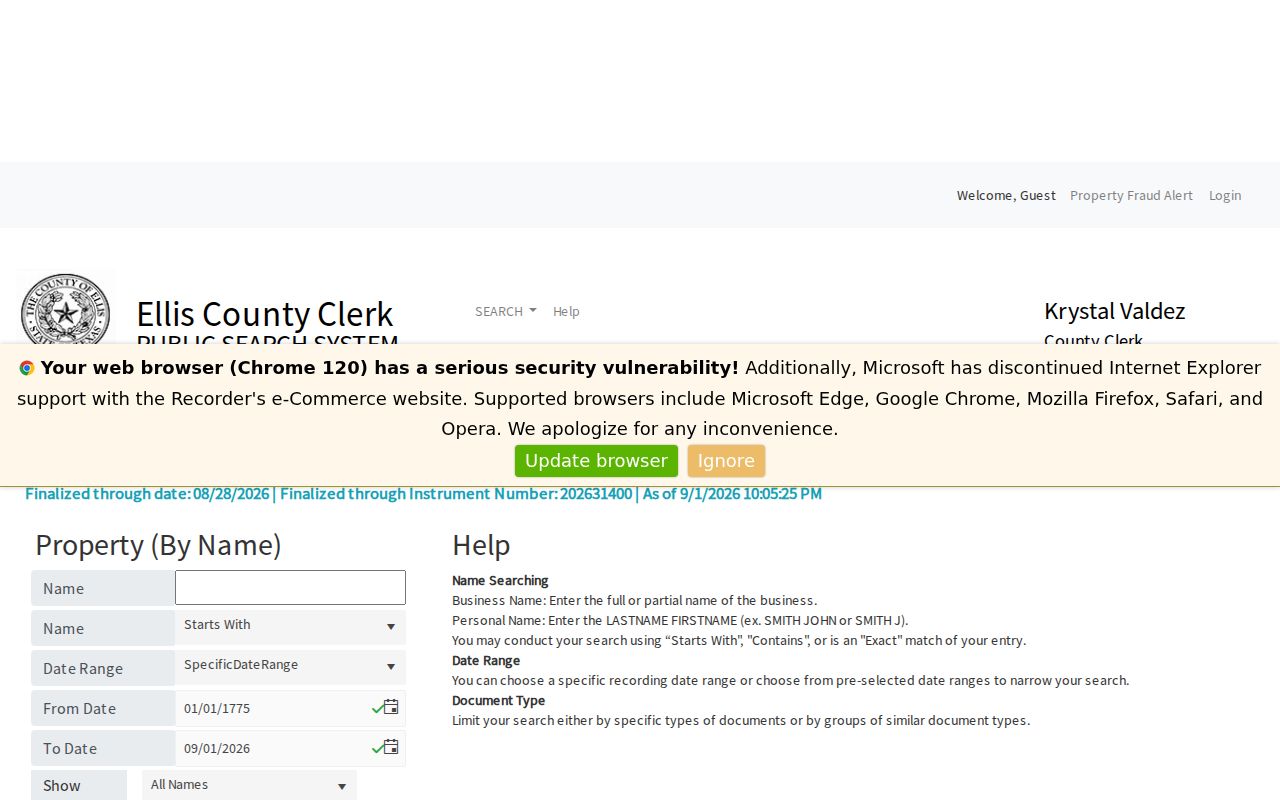
Its name search offers match choices, a date range, grantor and grantee roles, and document-type filters. Search each role separately and use the legal description to reject a same-name result from another parcel or county.
- Save the current ECAD parcel facts, especially the legal description and geographic ID.
- Find the current owner as grantee in AcclaimWeb, then open the result only after the instrument and description fit the parcel.
- Record the deed’s seller, recording date, instrument number, document type, and exact legal-description wording.
- Search that seller as a grantee in an earlier period, confirm the same land description, and repeat the sequence.
- When the online index no longer gives a defensible match, ask the County Clerk about deed books, archival indexes, or microfilm rather than guessing across the gap.
- Grantor / grantee
- The grantor transfers an interest named in the document; the grantee receives that stated interest. These roles are not a resident list.
- Chain of title
- A documented sequence of transfers for the same parcel, checked by legal description and instrument details rather than names alone.
- Legal description
- The lot, block, subdivision, survey, or metes-and-bounds wording that identifies land more reliably than a changing street address.
- Enumeration district
- The geographic area used to organize a census. It helps place a household in the correct historical count.
Midlothian Previous Residents Name Variants
A chain can look broken when the name changes form. Search both personal and entity names with Starts With, Contains, and Exact choices. Try surname-first order, an initial form, a married name, a trust, an estate, a partnership, or a corporate grantee. Stop when a result does not carry the same legal description. A familiar surname without matching land language is only a lead.
When the record sequence reaches an estate, look for probate material by decedent and legal description. An executor, heir, attorney, or court order may explain a transfer that seems to skip a person. If a trust or entity appears, search its exact name and distinguish a registered agent from the entity itself. For similar names, compare the county, instrument, date, and parcel before moving one step further back.
| Name | Use personal and entity variants; test the available match mode. |
|---|---|
| Date range | Narrow it after a confirmed transfer to reduce unrelated results. |
| Role | Search grantor and grantee separately to preserve the direction of the transfer. |
| Document type | DEED is the usual transfer starting point; related types can add context. |
| Instrument and legal description | The confirmation pair for a defensible parcel match. |
Midlothian Previous Residents Online Limits
AcclaimWeb posts a finalization date of 08/28/2026, but the live page does not state the earliest searchable date. A 2011 county notice said most record types were then online back to 1992 and described a project aimed toward 1845. That 1992 statement is historical context, not a current cutoff or a promise that every earlier result is available. Record the live finalization marker and describe the earliest year as not posted.
The TSLAC city-directory guide is one fallback route for historical research. It points to print and microform holdings and explains that remote staff searches and scans are not performed by phone or email.
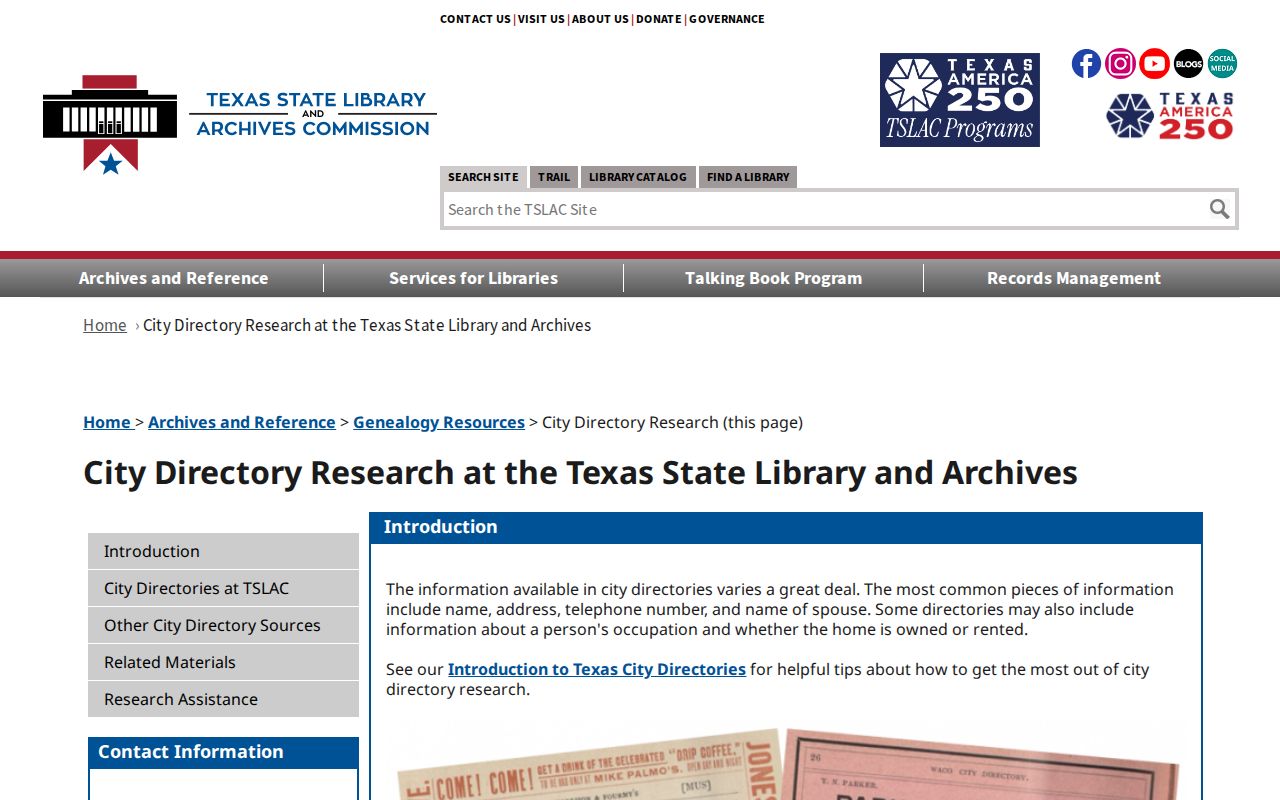
For older deeds, the County Clerk remains the custodian for certified copies. TSLAC and UTA Arlington can help identify microfilm or depository leads, but they do not replace the county record when a certified instrument is needed.
INSIDER TIP: The live AcclaimWeb page shows a current finalization line, while its earliest searchable year is not posted. Preserve both facts in the search log.
Note: Treat the historic 1992 statement as background context, not a current online coverage guarantee for every document type.
Midlothian Past Residents Household Trail
Ownership is only one layer of a past-residents search. A directory can place a telephone subscriber or household clue at an address, and a census can show a household on its enumeration date. The UNT 1983 Greater Dallas White Pages page supplies a documented Midlothian-area example, but it remains a regional volume rather than a complete local roll.
Record its edition, page, telephone wording, name, and address exactly. A subscriber name alone should not be turned into a full household list. The historical collections themselves are discussed in the Midlothian city directory collections.
- Put the deed’s recording date beside the nearest directory edition and record both sources exactly.
- Search the directory page for the surname, address spelling, route, telephone exchange, and any spouse notation.
- Find the nearest public census, currently through 1950, and capture its enumeration date and district before comparing names.
- Use a permit for construction or alteration timing, and a plat for subdivision timing, without treating either as proof of who was present.
- Use an obituary or probate record to investigate an heir transfer, preserving its publication or filing date with the other evidence.
Federal census boundaries can differ from today’s Midlothian limits. A census household, a 1980s telephone subscriber, and a current appraisal owner may all concern the same street while describing different people and different dates.
Midlothian Sanborn Map Limits
Sanborn maps establish building and street setting, not people. TxDOT identifies Midlothian coverage broadly from 1898 through 1944. The Library of Congress collection can be searched by state, city, and release date, with sheets and notes where digitized. Exact local edition availability was not verified.
Compare a map’s building footprint, material, use, and adjacent streets with the legal description, plat, and dated deed. That is especially helpful when a document carries a rural, railroad, or post-office description instead of a present street number. A map does not identify a past resident, and it cannot replace a directory, census, or recorded instrument.
Midlothian Previous Residents Address Breaks
No specific Midlothian street-renumbering event was located. Do not silently convert an old number into a current one. Bridge an apparent break with lot and block details, subdivision wording, the legal description, railroad or post-office references, old maps, and nearby street names. Search Barker as well as Midlothian, since the city’s post-office and railroad identity evolved before the modern name and incorporation.
The Midlothian Public Library is the local starting point for a narrow historical question. Its current location is 215 N. 8th Street, and current cardholders can access TexShare databases with a circulation-desk password. No official local house-history guide or confirmed directory run was found, so ask for a reference interview, a finding aid, or a repository referral.
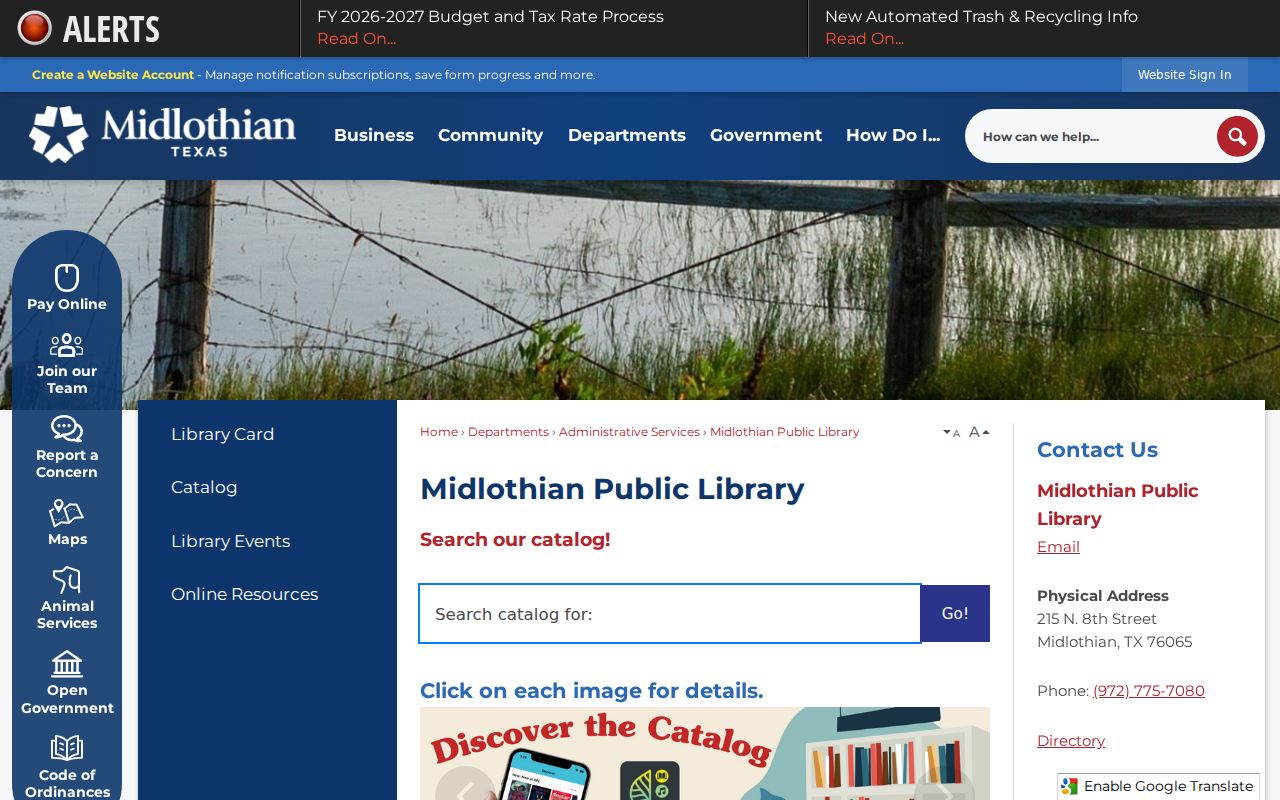
The library can direct a searcher to its catalog and local contacts. The Midlothian Area Historical Society, Ellis County Museum, Sims Library, TSLAC, and UTA Arlington are practical next stops for photographs, oral histories, historic-structure surveys, surname files, newspapers, or microfilm leads.
Note: Preserve old address wording in the research log rather than silently assigning it to a current street number.
Midlothian Previous Residents Safe Research
Use a past-residents trail for personal history, family history, civic curiosity, or a property-history question. Do not republish sensitive identifiers, protected survivor information, or a person’s precise details from an instrument. When an apparent address result is missing, it may be protected or belong to a different name form, parcel, or county. Ask the custodian about a redaction process when a record appears to contain sensitive information.
Ellis County’s Property Fraud Alert is a separate county service that watches a supplied name as grantor or grantee across more than 90 document types and sends an email or phone alert. It is an alert, not a prevention service or a title examination.
The alert can complement a record check by flagging a filing under the submitted name. It does not establish ownership, occupancy, or the validity of a document, so confirm any result through the County Clerk.
Lawful use. Midlothian previous-resident research belongs to personal and historical inquiry. Never use a record trail to stalk, harass, or harm a living person.